Retatrutide
Subcutaneous Use - It's often called a "triple-agonist" because it activates three hormone receptors (GLP-1, GIP, and glucagon) that regulate appetite, metabolism, and blood sugar.
Potential Benefits
Key advantages and therapeutic effects
Major Weight Loss
- One of the biggest benefits is very large weight reduction
- Clinical trials show about 17-24% body weight loss in ~48 weeks
- Later trial data reported around 26-28% average weight loss over 68 weeks
- Among the highest results ever seen for an obesity medication
Strong Appetite Suppression
- Retatrutide activates GLP-1 and GIP receptors, which:
- Reduce hunger
- Increase feelings of fullness
- Slow stomach emptying
- This naturally leads to lower calorie intake
Burns More Calories (Higher Metabolism)
- Unlike some weight-loss drugs that mainly reduce appetite, retatrutide also increases energy expenditure
- This happens because glucagon receptor activation:
- Stimulates fat breakdown
- Increases metabolic rate
- Encourages the body to use stored fat for energy
Improved Blood Sugar Control
- Research shows it can:
- Improve insulin sensitivity
- Lower fasting glucose
- Reduce HbA1c levels
Reduction of Body Fat (Especially Visceral Fat)
- Studies indicate it reduces:
- Visceral fat (dangerous belly fat)
- Total body fat mass
- Some studies show over 26% reduction in fat mass while maintaining lean mass
Potential Heart & Metabolic Benefits
- Early data suggests improvements in:
- Cholesterol and lipid profile
- Blood pressure
- Inflammation markers
- These changes could support better cardiovascular health
Injection Guide
Step-by-step subcutaneous administration
Gather Supplies
- Retatrutide 15mg vial
- Alcohol swabs
- 1cc insulin syringe
- 3cc syringe
- Sharps container or a safe disposal container
Wash Hands
- Thoroughly wash your hands with soap and water.
Prepare the Medication
- Using 3cc syringe draw 1.5ml of bacteriostatic water.
- Inject bacteriostatic water into the vial of powdered Retatrutide.
- DO NOT SHAKE the vial; gently swirl for 60 seconds.
Prepare the Dose
- If using a vial, clean the rubber top with an alcohol swab.
- Draw the preferred dosing units using a sterile insulin syringe.
- Remove air bubbles by tapping the syringe and pushing the plunger slightly.
Choose Injection Site
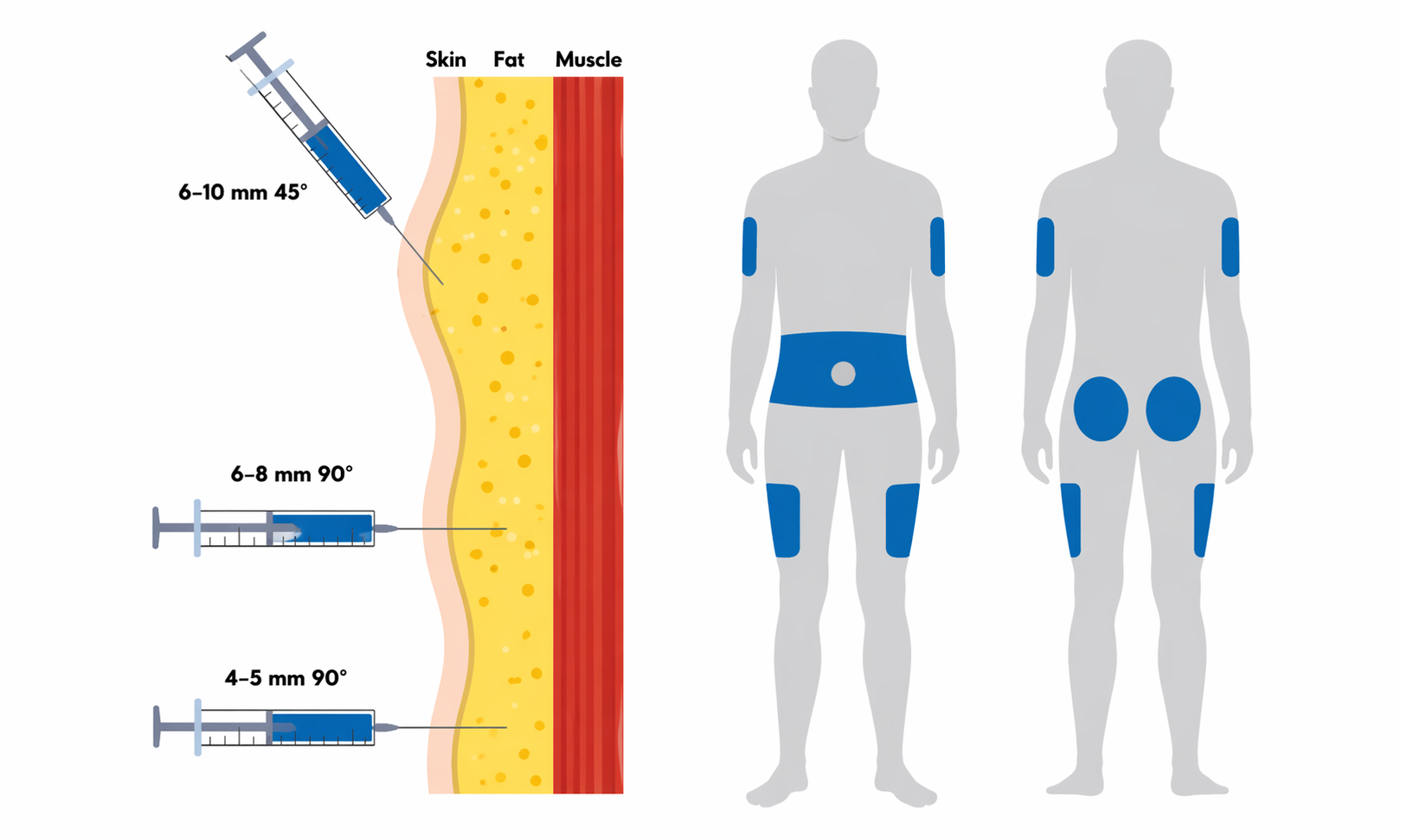
- Abdomen (at least 2 inches away from the navel)
- Thighs (front of the thigh)
- Back of the upper arm
Clean the Site
- Wipe the injection site with an alcohol swab and let it dry.
Inject the Medication
- Pinch a fold of skin
- Insert the needle at a 45 to 90-degree angle.
- Wait for 10 seconds.
- Push the plunger slowly and steadily to inject the full dose.
- Withdraw the needle and dispose of it properly.
- Apply light pressure with the alcohol swab pad.
Injection Sites
Recommended locations for administration
UPPER ARMS
Triceps area. If someone else is administering your subcutaneous injection. May also inject into the fleshy area on the back of your upper arm. This area isn't recommended for self-injection because it is difficult to reach and see while using proper technique.
ABDOMEN
Below your ribs and above your hip bones, at least 2 inches away from your belly button. Most people can easily reach because it's easy to see and reach — ideal for self-administering. Also, some research suggests subcutaneous injections in the abdomen may be less painful than the thigh.
THIGH
When injecting into your thigh, aim for the front or the outer sides. It's ideal to avoid injecting into the inner part of your thigh.
Rotate injection sites each week to keep skin healthy and medication effective. Avoid areas that are scarred, bruised, or irritated.
Dosing Guide
Calculate your dose - consult your healthcare provider
Dosage Calculator
Calculate your insulin syringe units
Total peptide in vial
Amount of water added
Amount you want to inject
Draw this amount on your syringe:
Concentration: 7.5 mg/mL
This is for general educational purposes only — actual dosing should always be set by a licensed physician.
Suggested Dosage: Retatrutide
General reference only. Consult your physician.
| Starting Dose | Typical Range | Upper-End / Max |
|---|---|---|
1-2 mg weekly | 4-8 mg weekly | 12 mg weekly |
1-2 mg weekly
4-8 mg weekly
12 mg weekly
This is for general educational purposes only — actual dosing should always be set by a licensed physician.
Side Effects
Potential adverse reactions to be aware of
Potential Side Effects
- Nausea (most common, usually temporary)
- Decreased appetite
- Diarrhea or constipation
- Injection site reactions
- Fatigue during titration
Cycle Information
Recommended timing between cycles
Consult Physician
(For dosing adjustments)